Looking for low-maintenance living near NYC without the premium of a walk-to-train town? Springfield gives you townhomes and condos that balance value, space, and convenience. Whether you are a first-time buyer, a downsizer, or a busy professional, you will find options that fit your lifestyle and budget.
In this guide, you will learn what you can buy in Springfield, how commuting works, what to check in an HOA, smart search tips, and how the town compares to nearby rail hubs. Let’s dive in.
Why Springfield works for buyers
Springfield Township sits in Union County and has a population of about 17,000, offering a suburban feel with varied housing choices. You will see both classic mid-century neighborhoods and several attached-home communities.
You also benefit from strong highway access and a range of attached-home price points compared to nearby train towns. For many buyers, the tradeoff is simple: accept a short drive or shuttle to rail in exchange for a lower purchase price and more space.
If you want quick local context, the township overview provides a helpful snapshot of location and transportation background. You can review the area details on the Springfield page to understand why many residents pair bus or jitney service with nearby rail options. For a broad town overview, see the Springfield entry on Wikipedia’s local page for reference.
What you can buy
Townhomes overview
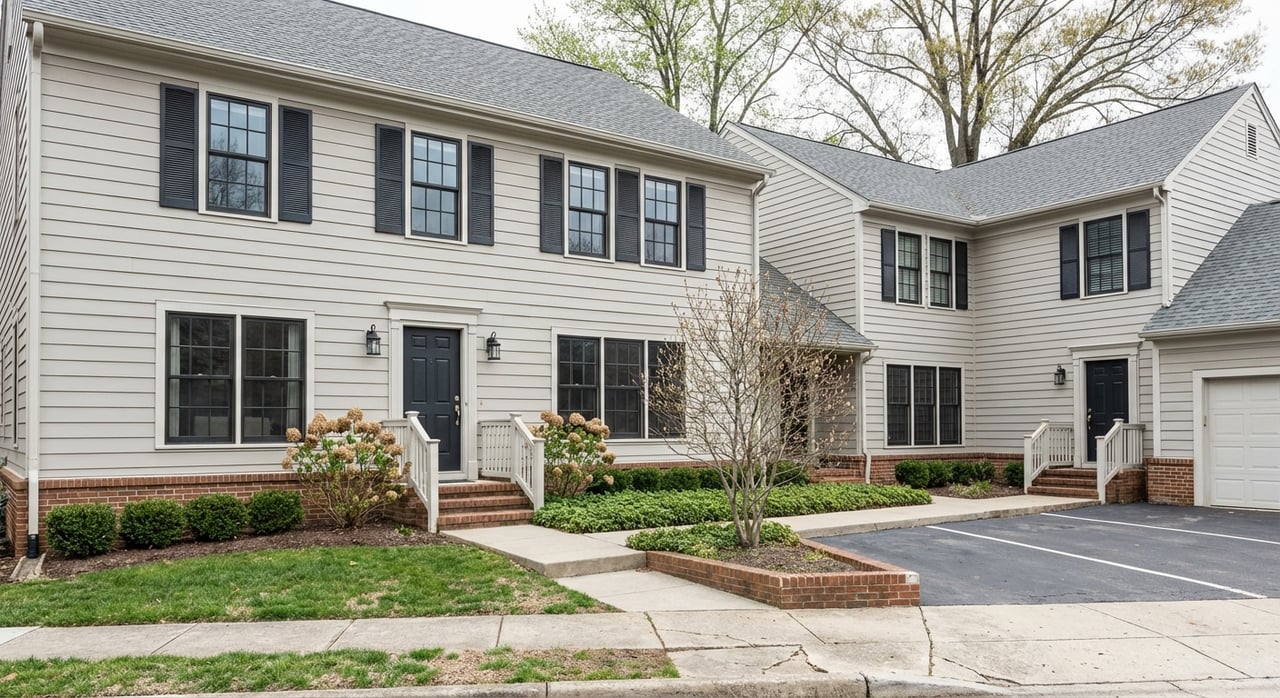
Springfield features suburban townhome communities, typically on private roads with shared amenities. Expect 2 to 3 bedrooms, 2 to 3 baths, and an open main level with a living, dining, and kitchen flow. Many units include a one-car attached garage, a finished or partially finished basement, and a small patio or deck.
Several communities offer pools, a clubhouse, and courts. This setup suits buyers who want more square footage than a condo, a bit of outdoor space, and less exterior maintenance than a single-family home.
Condos overview
You will also find low-rise or garden-style condos and some smaller condo conversions. These are usually 1 to 2 bedrooms with 1 to 2 baths. They tend to be lower maintenance with compact kitchens, and many have in-unit laundry in newer or updated units. Storage is more limited than in townhomes, and assigned surface parking is common.
Typical layouts and finishes
- Townhomes often feature an open main floor with sliding doors to a patio, and a primary suite on the upper level. Many 1980s to 1990s units include vaulted ceilings and wood or laminate floors, with kitchens and baths frequently updated over time.
- Condos tend to be efficient in layout, with some renovated kitchens and baths. If in-unit laundry is important, verify it in the listing or during showings.
Community amenities and fees
Many townhome communities in Springfield provide a gated entrance, pool, clubhouse, and tennis or pickleball courts. HOA fees often fall in the roughly 500 to 600 dollars per month range, though this varies by amenity level and what the association covers. Always confirm exactly what the fee includes.
What your HOA fee may cover:
- Exterior and grounds maintenance
- Snow removal and trash collection
- Building insurance on common elements
- Clubhouse, pool, and court upkeep
- Contributions to reserves for future repairs
Parking norms
Townhome buyers can usually expect an assigned space plus a one-car garage. Low-rise condo buildings often include one assigned surface space per unit, with visitor parking that can be limited. Ask for the written parking rules so you know how second cars, guests, and permits are handled.
Commuting from Springfield
Rail and bus options
Springfield does not have its own NJ Transit train station. Most residents use nearby Millburn or Short Hills on the Morris and Essex lines, with Maplewood or Summit as alternates. The township is served by NJ Transit bus routes that connect to Newark and to Manhattan-bound buses, and local shuttles or jitneys help riders reach nearby stations. You can confirm the township’s lack of a local station and the reliance on nearby rail in the Springfield overview on Wikipedia.
Because station parking policies evolve, it is smart to review current permit and daily parking rules before you commit to a routine. The Short Hills station page on NJ Transit is a good place to start for current parking details.
Driving and parking tips
Highway access is a Springfield strength. Many residents drive to nearby rail lots, park-and-ride locations, or shopping centers for daily needs. If a guaranteed daily parking spot near rail is essential, verify permit availability and waitlist status for the specific station you plan to use.
Commuter playbook
- Use a bus to Newark Penn, then transfer to rail as needed.
- Take a local shuttle or jitney to Short Hills or Millburn for Midtown Direct service.
- Drive to Summit, Maplewood, or another station that offers daily parking options for non-residents, subject to availability.
- Confirm bus timetables, jitney schedules, and station parking rules right before you start commuting.
HOA due diligence
Buying into a condo or townhome means you are joining a community association. New Jersey’s disclosure framework requires developers and associations to provide a Public Offering Statement and related materials for planned developments. If you are buying new construction or a sponsor unit, you should receive that packet. You can learn more about the Public Offering Statement and related requirements from a legal overview of New Jersey’s regime.
Documents to request
Springfield condo checklist: 7 items to request from the seller or HOA
- Master deed or declaration, bylaws, rules and regulations, and all amendments
- Current budget and the most recent financial statements
- Reserve study and recent bank or reserve confirmations
- Board meeting minutes from the past 12 to 24 months
- Master insurance policy and a clear outline of what it covers vs. what your HO-6 policy should cover
- Pet, rental, parking, and storage policies
- Any special assessment history and vendor contracts
For new developments, confirm the timeline for transfer of control from developer to owners. You can review a sample of New Jersey’s approach to developer turnover in a state legislative reference.
Why it matters
- Financial health affects your monthly costs and the risk of future assessments.
- Insurance details determine what you are responsible for inside your unit.
- Rules on pets, rentals, parking, and storage shape daily living and resale value.
- Board minutes reveal upcoming projects or disputes that may impact you.
Search tips by buyer type
First-time buyers and downsizers
- Filter for 1 to 2 bedroom condos or 2 bedroom townhomes.
- Make in-unit laundry, low-stairs or elevator access, and an HOA fee cap part of your criteria.
- If you own a second car or have frequent guests, prioritize assigned or garage parking and ample visitor spaces.
Busy professionals
- Focus on communities with a reliable shuttle or proven proximity to bus routes.
- Test your peak-hour commute. Time the walk to a bus stop or the drive to your preferred station.
- If daily station parking matters, verify the permit rules for the specific lot you plan to use.
Common tradeoffs in Springfield
- Price vs. commute convenience. Attached housing in Springfield is usually more affordable than in nearby rail towns. You trade a walk-to-train location for a lower purchase price and often more space.
- HOA fee vs. maintenance load. Higher monthly fees can be worth it if you want true lock-and-leave living. Lower fees may mean fewer amenities and potentially thinner reserves. Review the budget and reserve study to gauge risk.
- Size vs. price. Townhomes typically offer more square footage and a private deck or patio but cost more than 1 bedroom condos in the same area.
How Springfield compares nearby
- Springfield: More approachable price points for attached homes, no in-town station, strong highway access, several communities with pools and clubhouses.
- Maplewood: Walkable downtown and direct rail come with a premium over Springfield’s prices.
- Westfield: Downtown and rail access are strong, and attached homes command higher price points.
- Summit/Short Hills/Millburn: Direct Midtown rail options and high demand for station parking drive very high median prices, with fewer turnkey attached units available.
Implication for you: If you want larger, move-in ready attached homes at a more accessible price, Springfield is a strong candidate. If one-seat rail and walkability are must-haves, budget for a higher purchase price in a train town.
Making a winning offer
- Get fully underwritten pre-approval and have your proof of funds ready.
- Use a short but fair inspection timeline that targets common attached-home concerns like roofs, gutters, garage doors, and basement moisture.
- Ask for HOA documents early so you can evaluate fees, reserves, and any planned projects before final negotiations.
- Expect measured competition. Offers in Springfield are often strong but not as intense as in premium train towns. Timing still matters, so watch days on market and move decisively on well-presented units.
Next steps
If you are weighing Springfield against nearby towns or want help reading HOA financials and rules, let’s talk. With a design-first eye for finishes and flow, and deep local market knowledge across the Westfield–Summit corridor, I can help you zero in on the right community and unit. Ready to start? Connect with Eleana Giannisi for a friendly, detailed game plan.
FAQs
What is Springfield’s median home price right now?
- As of early 2026, Springfield’s overall median sale price is about 642,000 dollars; attached-home prices vary by size, condition, and community.
Does Springfield have a train station for NJ Transit?
- No. Residents typically use Short Hills, Millburn, Maplewood, or Summit, often with a shuttle or a short drive; see the town overview on Wikipedia for context.
How much are typical HOA fees in Springfield townhomes?
- Many communities fall in the roughly 500 to 600 dollars per month range, depending on amenities and what is included; confirm the exact coverage in the HOA documents.
What documents should I review before buying a condo or townhome?
- Request governing documents, recent financials, reserve study, insurance details, board minutes, rules on pets and rentals, and any special assessment history; see an overview of New Jersey’s disclosure framework here.
How is parking handled in Springfield condo and townhome communities?
- Townhomes often include an assigned space plus a one-car garage; condos typically offer one assigned surface spot, with visitor parking that can be limited; verify the written rules.
What are my commuter parking options near Springfield?
- Check permit and daily parking at nearby stations, starting with the Short Hills station page; rules and availability can differ by lot.